The best team time tracking software today goes beyond simple timers. Modern legal teams expect automated tracking, overtime monitoring, real-time revenue dashboards, integration with practice management systems like Clio, and secure administrative controls that support growing teams.
For managing partners and operations leaders, visibility into how time is spent across the organization has become critical. Firms that fail to capture billable activity consistently often lose substantial revenue every month through missed entries, delayed billing, and fragmented workflows.
This guide explores what legal teams should look for in team time tracking software in 2025, the operational challenges firms are trying to solve, and why automated solutions are rapidly replacing manual timekeeping methods.
Why Legal Teams Need Better Time Tracking in 2025
Law firms operate in one of the most time-sensitive industries in the world. Every call, email, document review, research session, or client meeting can represent billable work. Yet many firms still rely on manual timers, spreadsheets, or delayed end-of-day time reconstruction.
This creates several operational risks:
- Lost billable hours
- Inaccurate invoices
- Attorney burnout from administrative work
- Revenue leakage
- Poor visibility into staff productivity
- Compliance and overtime concerns
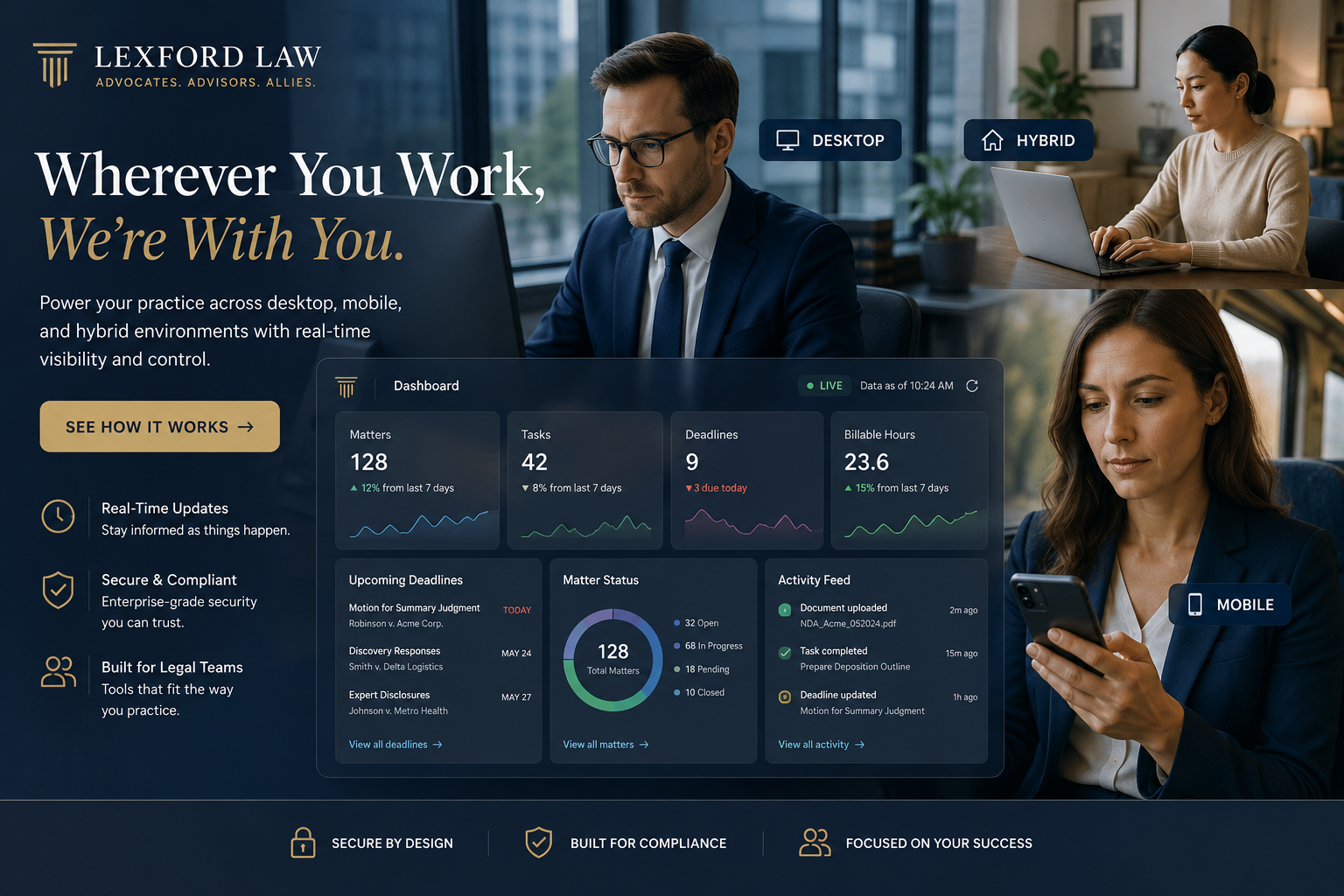
In modern legal environments, firms increasingly need centralized visibility into how teams spend time across matters and clients. This is especially important for firms managing remote attorneys, paralegals, contractors, and distributed support staff.
The best time tracking platforms help firms automate capture while maintaining flexibility and control. Instead of forcing attorneys to constantly start and stop timers, modern systems intelligently record activity in the background and convert it into billable time entries.
Key Features Legal Teams Should Prioritize
1. Automated Time Capture
The most effective legal time tracking software minimizes user friction. Attorneys should not have to constantly think about tracking time throughout the day.
Automated time capture records activity passively across:
- Emails
- Documents
- Websites
- Calls
- Applications
- Meetings
This allows legal professionals to reconstruct billable work accurately without interrupting focus. Automation is especially valuable for attorneys juggling multiple matters simultaneously throughout the day.
Firms that adopt passive tracking systems often improve billing accuracy while reducing administrative overhead for attorneys and support staff.
2. Overtime Monitoring and Workforce Visibility
Overtime visibility has become increasingly important for law firms managing large teams, especially firms with paralegals, intake teams, support departments, and hybrid schedules.
Managers need the ability to identify:
- Employees approaching overtime thresholds
- Underutilized staff
- Uneven workload distribution
- Burnout risks
- Unexpected labor costs
Advanced dashboards can help leadership monitor utilization trends in real time, allowing firms to proactively rebalance workloads before productivity or morale suffers.
For firms operating across multiple jurisdictions, overtime monitoring can also support labor compliance and improve operational forecasting.
3. Export to Clio and Other Practice Management Systems
One of the most valuable capabilities in modern legal time tracking software is seamless integration with practice management platforms.
Firms increasingly expect the ability to export tracked time directly into systems such as:
- Clio
- MyCase
- PracticePanther
- Rocket Matter
- CosmoLex
- LEAP
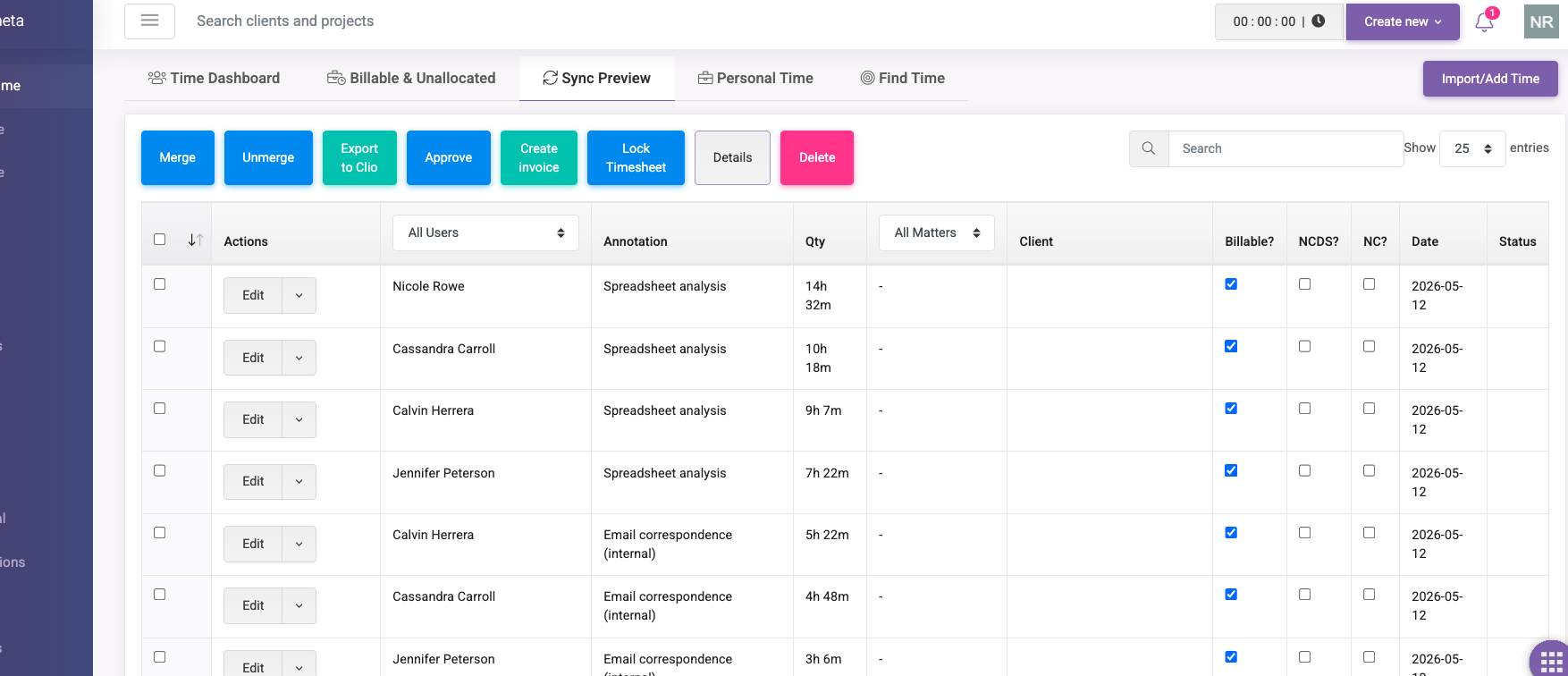
For administrators and team managers, the ability to export time on behalf of team members is especially important. Instead of requiring attorneys to manually review and submit every entry individually, designated admins can help streamline billing workflows across the organization.
This reduces administrative bottlenecks and accelerates invoice generation while improving consistency across billing records.
For growing firms, integration capabilities often become a deciding factor when selecting software.
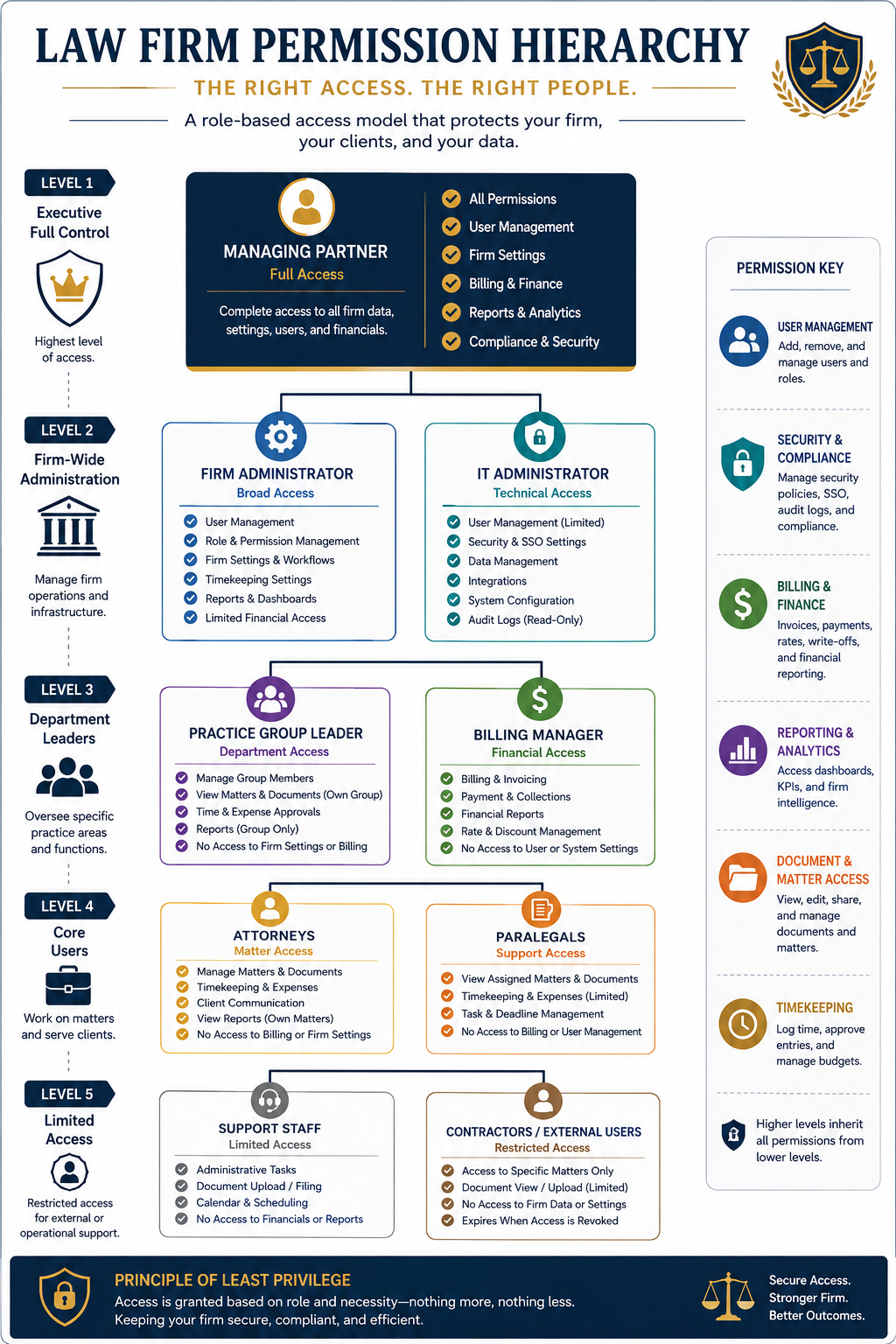
4. Co-Team Admin Access Control
As firms scale, operational responsibilities become more distributed. Managing partners, office managers, operations leaders, and billing supervisors often all require different levels of access.
Modern time tracking software should support flexible role-based permissions, including:
- Co-team administrators
- Department managers
- Billing-only access
- Read-only reporting access
- User-level visibility controls
This allows firms to delegate operational tasks securely without granting unnecessary administrative privileges across the entire organization.
Strong access control also supports better governance and data security, both increasingly important for legal organizations handling sensitive client information.
5. Free Seats for Team Admins
Software pricing has become a major consideration for firms expanding their operations. Many platforms charge for every single user regardless of role, which can significantly increase costs for administrative staff who only need limited operational access.
A growing trend among attorney-focused software providers is offering free seats for team admins or billing administrators who are not actively tracking billable time themselves.
This creates several advantages:
- Lower operational software costs
- Easier collaboration across departments
- Improved workflow delegation
- Better reporting visibility
- Reduced licensing friction during scaling
For firms managing dozens or hundreds of users, these pricing structures can produce meaningful long-term savings.
The Importance of Real-Time Revenue Dashboards
Legal operations leaders increasingly rely on live reporting rather than end-of-month financial summaries. Real-time dashboards help firms understand performance as it happens.
Modern dashboards typically provide visibility into:
- Billable hours
- Revenue projections
- Utilization rates
- Productivity trends
- Matter profitability
- Team performance
This data allows firms to make faster operational decisions and identify potential revenue gaps before billing cycles close.
For example, if a department shows declining billable utilization midway through the month, managers can intervene immediately rather than discovering the issue weeks later.
Real-time visibility also helps firms forecast cash flow more accurately and improve staffing decisions.
How Team Time Tracking Improves Law Firm Profitability
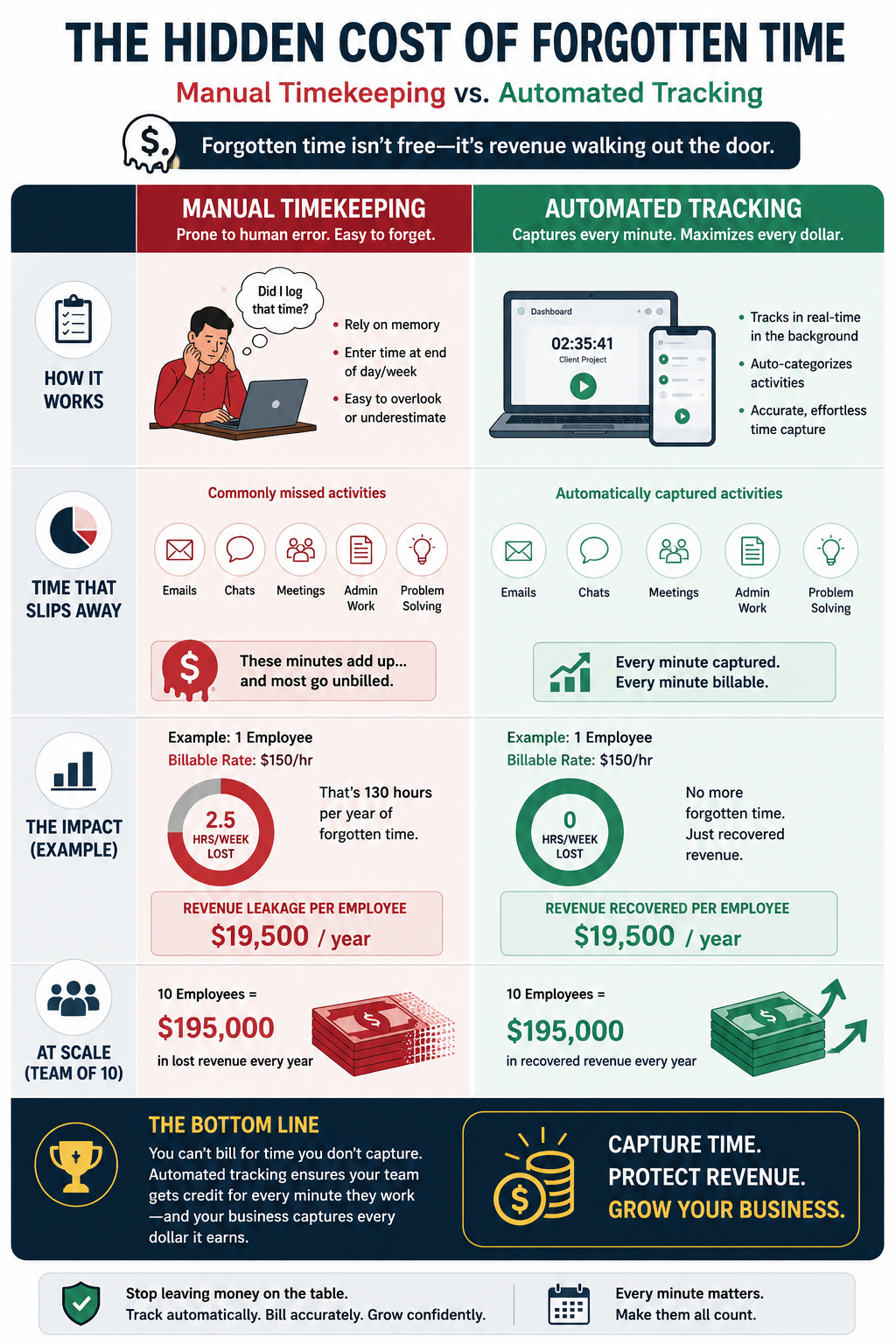
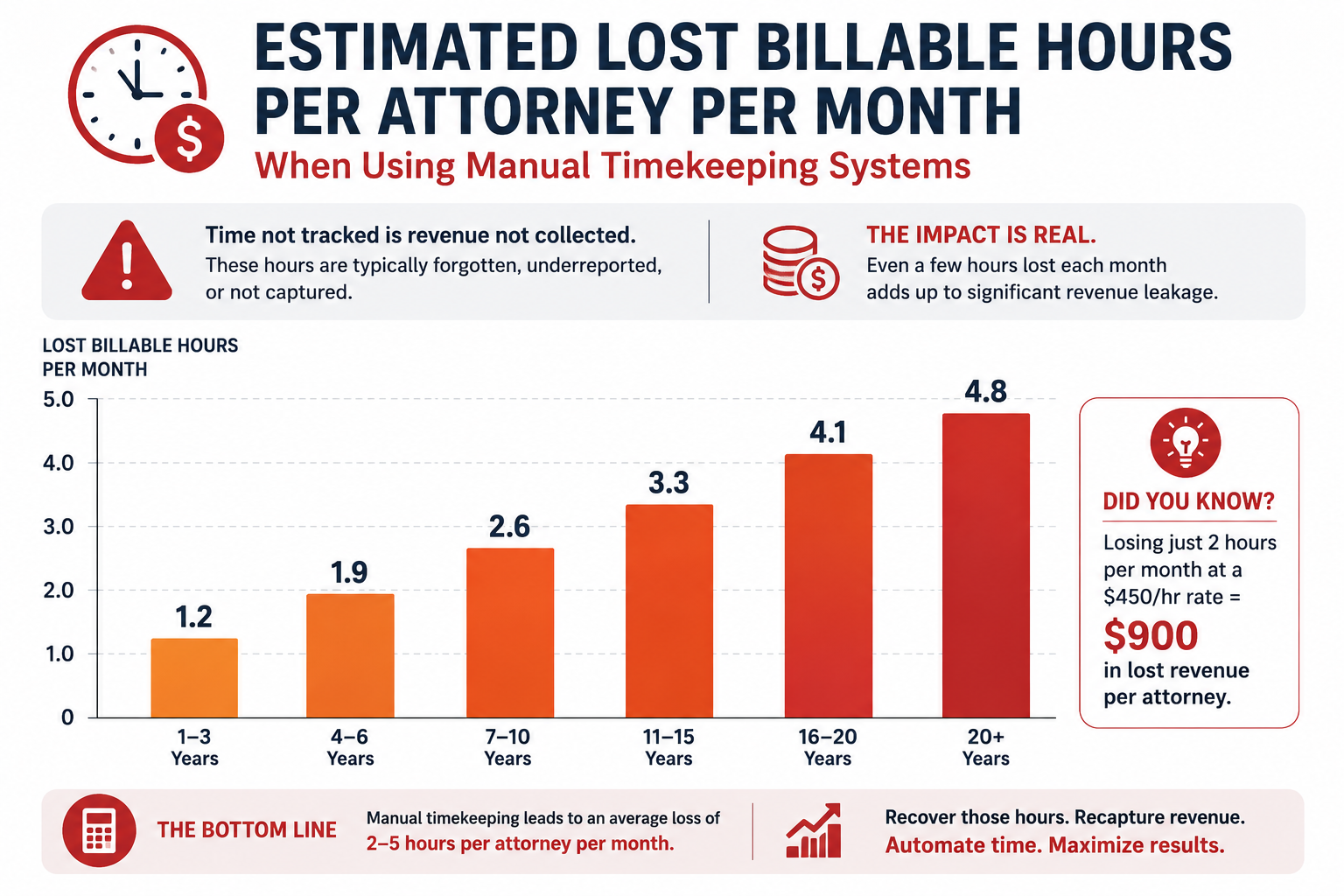
Profitability in law firms is closely tied to time capture accuracy. Even small gaps in recorded time can create major financial losses over the course of a year.
For example, if a single attorney loses just 30 minutes of billable time daily, the annual revenue impact can be substantial depending on billing rates.
Automated tracking helps recover:
- Forgotten emails
- Short research sessions
- Client calls
- Quick document reviews
- Administrative context switching
Additionally, centralized reporting enables firms to identify inefficiencies in workflows and staffing models that might otherwise remain invisible.
The result is often a combination of:
- Higher captured revenue
- Faster billing cycles
- Reduced write-downs
- Improved attorney accountability
- Better operational forecasting
Security and Compliance Considerations
Law firms handle highly sensitive client information, making data security a major factor when evaluating software platforms.
Legal teams should prioritize vendors offering:
- Encrypted data storage
- Role-based permissions
- Secure cloud infrastructure
- Audit trails
- Single sign-on support
- Compliance-friendly reporting
As cybersecurity threats continue to evolve, firms increasingly expect enterprise-grade security standards even from productivity tools.
For larger organizations, administrative visibility and auditability are often just as important as tracking functionality itself.
Why Legal Teams Are Moving Away from Manual Timers
Traditional timers rely heavily on user discipline. Attorneys frequently forget to start or stop timers, particularly during fast-paced multitasking.
This creates fragmented records and forces end-of-day reconstruction, which is both time-consuming and inaccurate.
In contrast, passive tracking systems align more naturally with how attorneys actually work. Instead of interrupting workflows, automated systems build timelines in the background that attorneys can later review and categorize.
This significantly reduces:
- Administrative burden
- Missed billable work
- Billing disputes
- Time entry fatigue
As firms continue prioritizing efficiency and profitability, automated capture is becoming the preferred model across the legal industry.
What Makes Chrometa Different for Legal Teams
Legal teams require more than generic employee monitoring software. They need purpose-built workflows designed around billable work, legal operations, and client accountability.
Chrometa focuses specifically on helping professionals automatically capture billable time with minimal friction while giving firms the operational visibility they need to scale.
Key capabilities include:
- Automatic background time capture
- Real-time productivity and revenue dashboards
- Overtime monitoring visibility
- Export support for Clio and other legal platforms
- Administrative team management controls
- Co-team admin access
- Free seats for administrators
By reducing manual effort and improving billing accuracy, firms can focus more on client work and less on reconstructing time entries.
For growing firms, operational visibility becomes increasingly important. Leadership teams need immediate access to utilization, productivity, and revenue trends without waiting for monthly reporting cycles.
How to Choose the Right Team Time Tracking Software
When evaluating legal time tracking software in 2025, firms should focus on long-term operational fit rather than simply comparing feature lists.
Important evaluation criteria include:
- Ease of adoption
- Automation quality
- Integration support
- Administrative controls
- Reporting capabilities
- Scalability
- Security standards
- Pricing flexibility
The best systems reduce friction rather than adding more administrative tasks to attorneys’ workloads.
Law firms should also consider how software will support future operational growth. As teams expand, visibility, delegation, reporting, and workflow automation become increasingly important.
Ultimately, successful time tracking systems are the ones attorneys actually use consistently.
Conclusion
In 2025, the best team time tracking software for law firms is no longer just about recording hours — it is about improving profitability, operational visibility, compliance, and attorney efficiency. Legal teams need platforms that automate time capture, integrate seamlessly with systems like Clio, support secure administrative delegation, monitor overtime trends, and provide real-time revenue insights across the organization.
As firms continue adapting to hybrid work environments and increasing client expectations, manual timekeeping methods are becoming increasingly inefficient and costly. Automated legal time tracking solutions help firms recover lost billable hours, reduce administrative overhead, improve billing accuracy, and make smarter operational decisions using live data.
For firms looking to modernize their workflows and improve financial performance, investing in the right time tracking platform can create measurable long-term value.
Call to Action:
Ready to improve billable accuracy and gain real-time visibility into your legal team’s productivity? Discover how Chrometa helps law firms automate time tracking, streamline billing workflows, and maximize revenue with less administrative effort.
Similar Stories


Enterprise
5 Resources to Boost Your Freelance Productivity
The modern freelancer has a lot of plates to spin on a daily basis in order to succeed – and there never seems to be enough hours in the day. Those that use their limited time most efficiently will blow past the competition and make an impact in their chosen market. . Read More

Enterprise
6 Tips to Maintain a Healthy Work-Life Balance during COVID
Confinement, lockdown, quarantine, shelter-in-place… .... Read More